
 Delivery and payment









-100x100.png)
-100x100.png)





















































- Creatine — what it is – What creatine is in simple words – How creatine works in the body – Natural sources of creatine
- Creatine — benefits for the body – Increase in strength and endurance – Muscle mass growth – Faster recovery after workouts
- Creatine — benefits not only for sport – Effects on the brain and cognitive functions – More energy and focus – Potential health benefits
- Creatine — types and forms – Creatine monohydrate – Creatine hydrochloride and other forms – Which creatine is better to choose
- Creatine — how to take it correctly – Recommended dosage – Is a loading phase needed – When it’s better to take creatine
- Creatine — how to drink it for maximum effect – What to combine creatine with – Water and hydration – Course duration
- Creatine — side effects – Possible body reactions – Common myths about harm – Who should not take it
- Creatine — safety and research – Scientific data and safety with long-term use
- Creatine — for men and women – Specifics of use in men – Creatine for women – Is there a difference in effect
- Creatine — for different goals
- Creatine — how to choose a quality product – What to look for when buying
- Creatine — pros and cons – Advantages – Possible drawbacks and who it suits best
- Creatine — mistakes when taking it – Typical mistakes
- Creatine — FAQ – Can you take it every day – How soon results are visible – Is creatine harmful for the kidneys – Which creatine is the most effective
- Sources
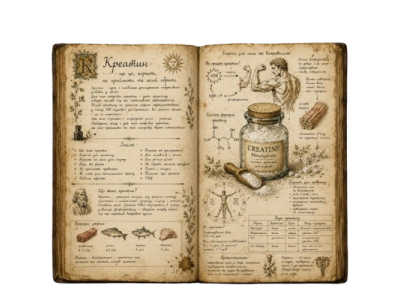
Creatine is one of the most researched sports supplements in the world. What creatine is is a question asked not only by athletes, but also by anyone who wants more energy, better recovery, and smart support for muscles. What creatine is needed for is to give the body fast fuel during intense exertion. The effect of creatine on the human body has been documented in more than 500 scientific studies: it really works, and it’s not marketing.
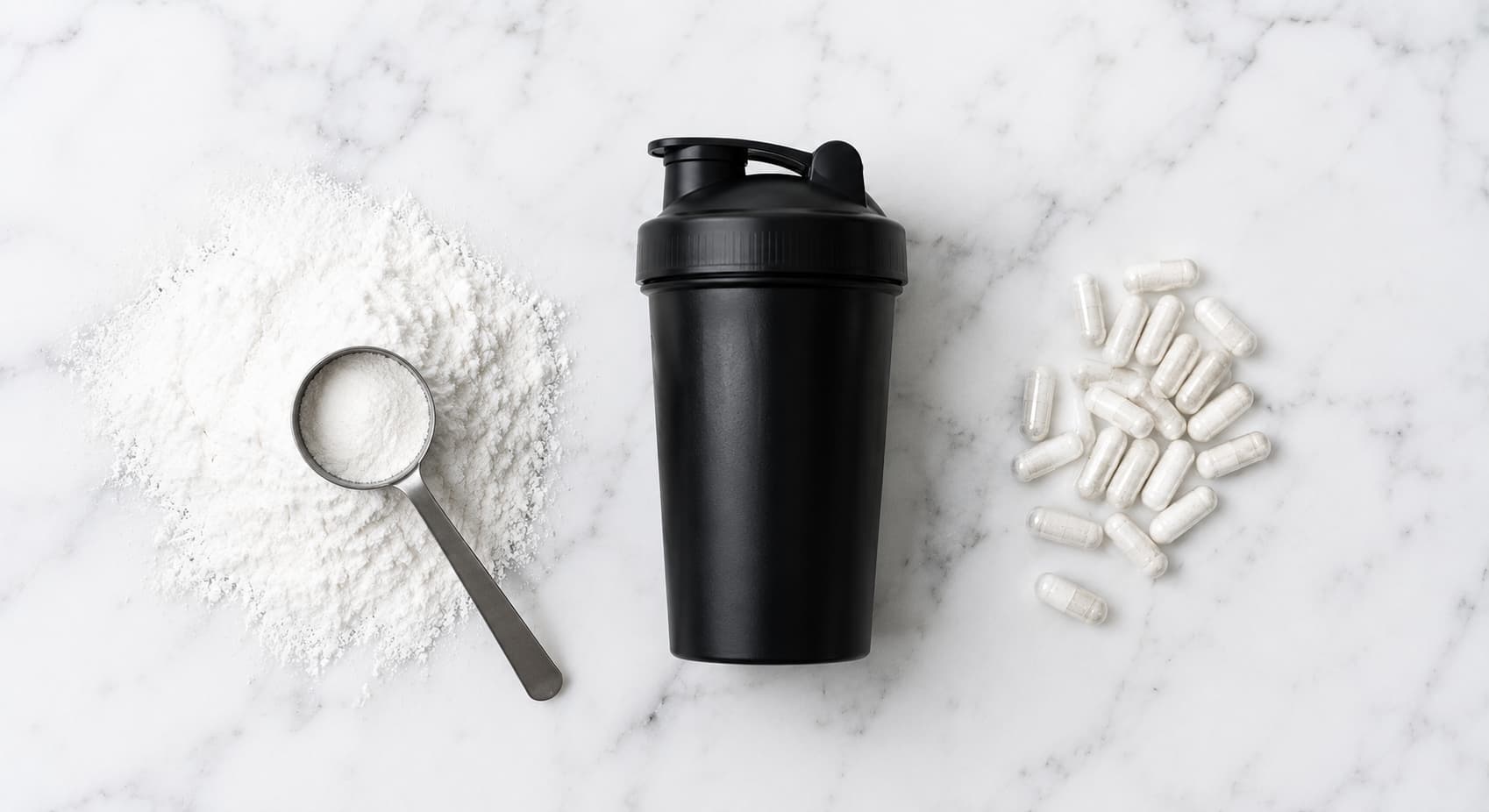
But there is a difference between “works” and “suits everyone.” Let’s break down who needs creatine and what for, how to take it, and what you actually should be wary of.
Creatine — what it is
What creatine is in simple words
Creatine is an organic compound that the body synthesizes on its own—in the liver, kidneys, and pancreas—from the amino acids arginine, glycine, and methionine. The main reserve (about 95%) is stored in muscles in the form of phosphocreatine. It serves as a quick energy reserve during short, explosive efforts—sprinting, heavy barbell lifts, a sharp acceleration.
Creatine is not a hormone, not a steroid, and not a stimulant. It is a substance that is already in your body. A supplement simply increases its stores above the natural level.
How creatine works in the body
During intense exercise, muscles use ATP—the “energy currency” of cells. ATP stores last literally 1–2 seconds. Then phosphocreatine comes into play: it donates its phosphate group, restoring ATP from ADP. The more phosphocreatine, the longer the muscle can maintain peak power. What creatine gives in practice: more reps, heavier weight, less fatigue between sets.
Natural sources of creatine
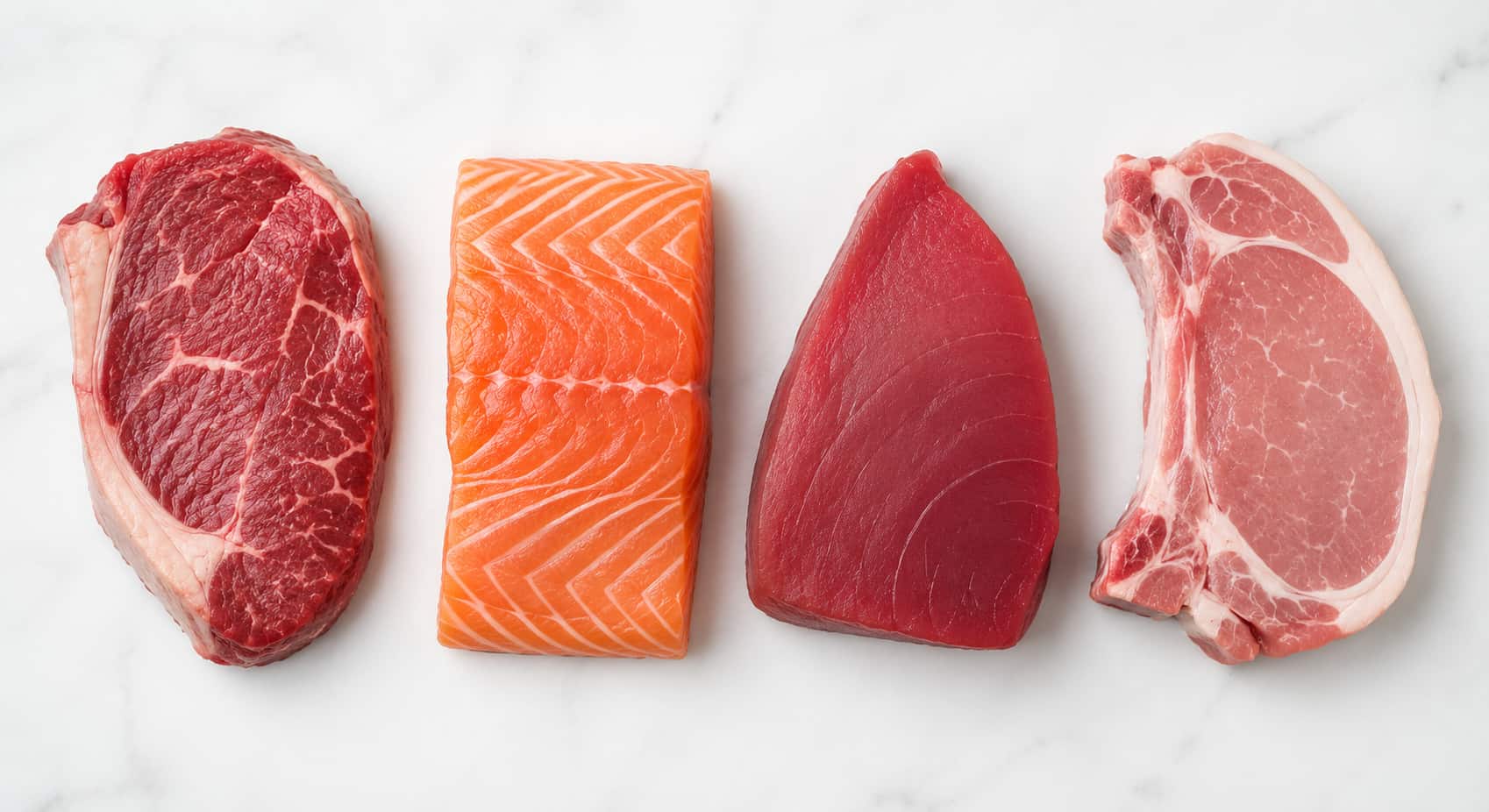
What creatine from food is needed for is to cover the daily requirement, which for an average person is 1–3 g/day. Main sources: beef (4–5 g/kg), salmon (4.5 g/kg), tuna (4 g/kg), pork (5 g/kg). For vegans and vegetarians—there’s practically nowhere to get it: plant foods contain negligible amounts. That’s why their muscle creatine levels are usually lower, and they get the most noticeable effect from supplementation.
Creatine — benefits for the body
Increase in strength and endurance
Creatine for strength is the best-documented effect. A 2003 meta-analysis (Lanhner & Rawson, Journal of Strength & Conditioning Research) covered 22 studies and showed that creatine intake increases maximal strength by an average of 8% and strength endurance by 14% compared to placebo. This is not a “noticeable boost”—it is a measured result in kilograms and repetitions.
Muscle mass growth
Creatine for mass gain works through two mechanisms. The first is increasing cell volume: creatine pulls water into the muscle cell, producing so-called cellular hydration. The muscle looks bigger and denser. The second is a real anabolic effect: more energy in training = a greater training stimulus = greater growth of muscle fibers. Over 4–12 weeks of use, +1–2 kg of lean muscle mass beyond placebo is recorded.
Faster recovery after workouts
Creatine reduces the level of markers of muscle damage (CK, lactate dehydrogenase) after intense exercise. This means less soreness the next day and shorter time between full training sessions. For those who train 4–5 times a week, this is a significant advantage.

Creatine — benefits not only for sport
Effects on the brain and cognitive functions
The brain also uses phosphocreatine as a backup energy source—especially during mental load or lack of sleep. A 2003 study (Rae et al., Proceedings of the Royal Society) showed that vegans who took 5 g of creatine per day for 6 weeks significantly improved their test results for working memory and information processing speed. Not neuropharmacology—but a real and measurable effect.
More energy and focus
What creatine is also relevant for is people with chronic fatigue and mental exhaustion. With sleep deprivation, phosphocreatine levels in the brain decrease; supplementation partially compensates for this deficit. The effect is moderate but reproducible—especially in vegetarians and under stress loads.
Potential health benefits
There are preliminary data on benefits for sarcopenia, Parkinson’s disease, and type 2 diabetes. Most directions are still being studied, but none have shown harm at standard doses.
Creatine — types and forms
Creatine monohydrate
Creatine monohydrate is the gold standard. 95% of all studies were conducted on this form. The cheapest, the best studied, the most effective per unit cost. The only downside is that in some people (5–10%) it causes stomach discomfort. In such cases, a micronized form helps—smaller particles that dissolve better.
Creatine hydrochloride and other forms
Creatine hydrochloride (HCl) dissolves better in water and is gentler on the GI tract, but has a smaller evidence base. Buffered (Kre-Alkalyn) is marketed as “no loading phase needed,” but there is no direct comparative advantage in studies. Ethyl ester converts poorly in muscles and is inferior to monohydrate.
Which creatine is better to choose
| Form | Absorption | Price | Who it’s suitable for |
|---|---|---|---|
| Monohydrate | High | Low | For most people — the optimal choice |
| Micronized | High | Medium | Sensitive GI tract |
| HCl | Very high | High | Minimal dose, sensitive GI tract |
| Kre-Alkalyn | High | High | For those who don’t want loading |
The conclusion is simple: start with monohydrate. If you have digestive issues, switch to micronized or HCl.
.jpg)
Creatine — how to take it correctly
Recommended dosage
Creatine dosage—the standard maintenance dose: 3–5 g per day. This is the amount confirmed by studies as sufficient to saturate muscles with regular intake. Body weight has almost no effect—the difference between a 70 kg and a 100 kg person in effective dose is minor.
Is a loading phase needed
A loading phase—20 g/day for 5–7 days—allows you to saturate muscles in a week instead of a month. The end result after a month is the same with both approaches. Loading is for those who need an effect quickly: before competitions or simply don’t want to wait.
When it’s better to take creatine
Timing is not critical; consistency is more important. A 2013 study (Antonio & Ciccone) showed that taking it after training produced a slightly better result than before. After—slightly better; anytime—good.
Creatine — how to drink it for maximum effect
What to combine creatine with
How to drink creatine for better absorption—with carbohydrates or a combination of carbohydrates and protein. The insulin response after a meal or sports drink increases creatine transport into cells. The classic approach: dissolve it in juice or take it together with a gainer after training.
Caffeine neither interferes nor helps—newer studies did not confirm old data about competition between them.
Water and hydration
Creatine pulls water into muscle cells, so overall fluid needs increase. At least 2–2.5 liters of water per day while taking it is a must. Insufficient water intake when using creatine can cause cramps and headaches—not due to the “harmfulness” of the substance, but due to simple dehydration.

Course duration
A creatine course is a question without a single clear answer. Most studies lasting 4–52 weeks do not record negative consequences. A popular scheme: 8–12 weeks on, 4 weeks off. But some people take it for years without breaks—and scientific data provide no grounds to object. The break is needed not for the kidneys, but psychologically: to evaluate progress “without it.”
Creatine — side effects
Possible body reactions
Creatine side effects at standard doses are minimal. The most common are: gastrointestinal discomfort (especially during loading), water retention (in the first 1–2 weeks +0.5–1.5 kg—this is fluid, not fat), rarely—muscle cramps with insufficient drinking.
Common myths about harm
Creatine harm is a topic with many fears and few facts. Myth #1: “destroys the kidneys.” Not confirmed in healthy people by any study. Myth #2: “causes hair loss.” One 2009 study recorded increased DHT (dihydrotestosterone) in rugby players taking creatine. The link to alopecia is not proven. Myth #3: “it’s a steroid.” No. It’s a natural substance from meat and fish.
Who should not take it
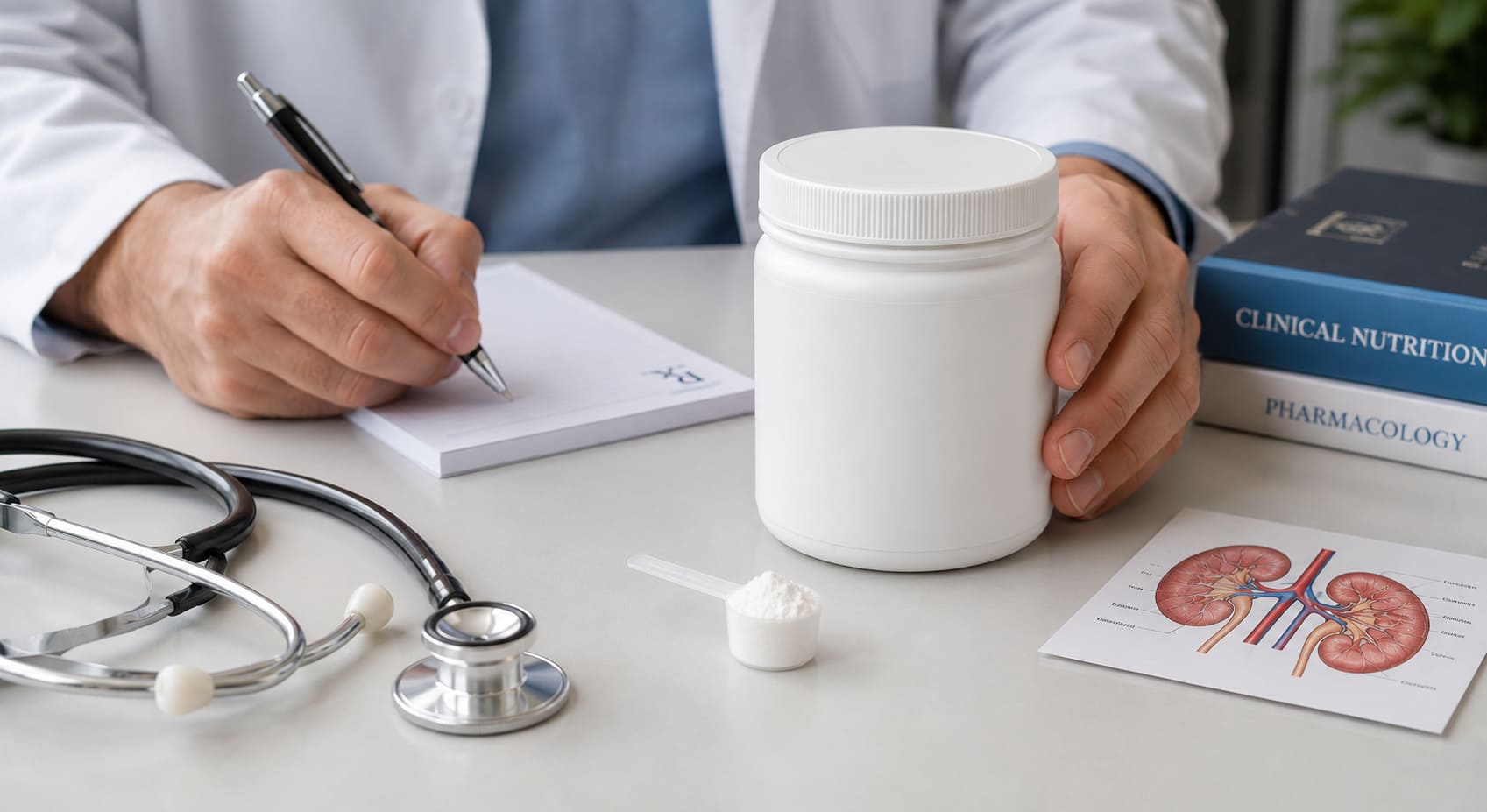
Chronic kidney disease—only with a nephrologist. Teenagers under 16—not recommended. Pregnant and breastfeeding—insufficient data. With bipolar disorder—there are isolated reports of worsening.
Creatine — safety and research
Scientific data and safety with long-term use
Creatine effectiveness is confirmed by more than 500 peer-reviewed studies. The International Society of Sports Nutrition (ISSN) in its 2017 position stand called monohydrate “the most effective ergogenic dietary supplement” for increasing strength endurance. Studies lasting up to 5 years did not record significant side effects at doses of 3–5 g/day.
A popular mistake: “after stopping, muscles deflate.” Partly true—fluid held by creatine goes away. But the real muscle mass gained does not disappear. Another: “you need to cycle it.” There is no scientific justification.
Creatine — for men and women
Specifics of use in men
Creatine for men is especially effective in strength sports and team games with explosive efforts. The average strength effect is higher than in women—due to higher baseline testosterone levels and greater muscle mass that responds to phosphocreatine saturation.
Creatine for women
Creatine for women is an underrated topic. Women usually have lower natural creatine levels in muscles, so the potential effect from supplementation is larger in percentage terms. Especially relevant: strength training, muscle support in menopause (sarcopenia), cognitive support. Nothing specifically “female” is needed in the formula—regular monohydrate.
Is there a difference in effect
The overall effect is similar. Men more often get a larger increase in strength, women—better endurance. Water retention in women is less pronounced.
Creatine — for different goals
| Goal | How to use |
|---|---|
| Gaining muscle mass | 3–5 g/day + calorie surplus, protein, strength training |
| Strength and endurance | 3–5 g/day, after training, loading optional |
| Weight loss and definition | 3 g/day to preserve muscle in a calorie deficit |
| Cognitive support | 3–5 g/day, in the morning or with food |
Creatine for weight loss does not burn fat directly, but it helps preserve muscle mass during a diet—and that supports basal metabolism and improves definition.

Creatine — how to choose a quality product
What to look for when buying
The first sign of quality is Creapure raw material: a patented form from AlzChem with 99.99% purity. Most well-known brands indicate this on the packaging. Ideally, the ingredients list should contain just one thing: creatine monohydrate.
Certificates: Informed Sport or NSF Certified for Sport—guarantee the absence of banned substances (relevant for athletes undergoing doping control). How to avoid counterfeits: buy from trusted stores, check the batch/serial number on the manufacturer’s website.
Creatine — pros and cons
Advantages
- The strongest evidence base among all sports supplements.
- Real and measurable gains in strength and muscle mass.
- Safe with long-term use in healthy people.
- Affordable price—especially monohydrate.
- Not doping—WADA does not ban it.
- Useful not only in sport but also for the brain.
Possible drawbacks and who it suits best
Cons: in the first 1–2 weeks, water retention is possible; GI discomfort during loading; not suitable for kidney disease without medical supervision; no effect without training. Best suited for: strength athletes and CrossFitters, sprinters and team sports, vegans and vegetarians, women over 40 to preserve muscle, people with mental exhaustion.
Creatine — mistakes when taking it
Typical mistakes
- Incorrect dosage: taking 10 g/day “to make it faster”—the excess is simply excreted by the kidneys; the effect does not increase.
- Insufficient water intake: at least 2 L/day, otherwise cramps and headaches.
- Irregular intake: skipping days—muscle levels drop and the effect becomes unstable.
- Expecting an effect without training—without load, creatine doesn’t “build” muscle.
- Buying the cheapest product without certification—risk of impurities.
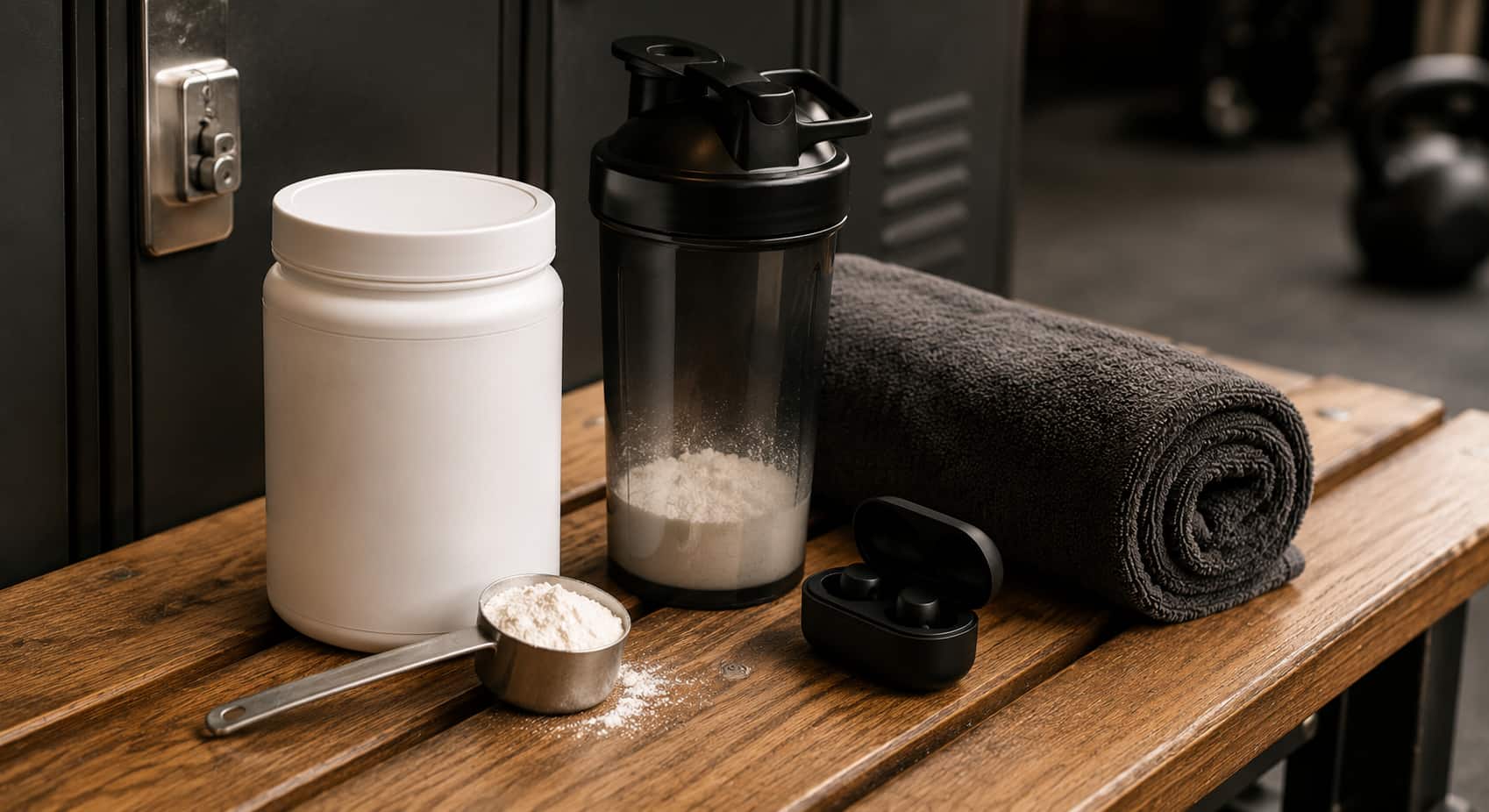
Creatine — FAQ
Can you take it every day
Yes, daily intake is the norm and the recommendation. Consistency is what ensures a stable, high level of phosphocreatine in muscles. Skipping reduces effectiveness.
How soon results are visible
Creatine results: the first changes in strength—after 1–2 weeks. With a loading phase—faster. A visible difference in mass and muscle volume—after 3–4 weeks of regular intake and training.
Is creatine harmful for the kidneys
For healthy people—no, which is confirmed by many years of studies. Creatine increases blood creatinine levels—but this is not a sign of kidney damage; it is a normal metabolic response. With existing kidney disease—only with a nephrologist’s approval.
Which creatine is the most effective
Creapure monohydrate. The largest evidence base, the lowest price, the best reproducibility of results. All other forms are either equal in effectiveness at a higher price, or inferior. Exception: with GI issues—micronized or HCl.
Sources
- Lanhner L., Rawson E.S. Creatine supplementation with specific view to exercise/sports performance. Journal of S&C Research, 2003.
- Rae C. et al. Oral creatine monohydrate supplementation improves brain performance. Proceedings of the Royal Society, 2003.
- Antonio J., Ciccone V. The effects of pre versus post workout creatine supplementation. Journal of the ISSN, 2013.
- Kreider R.B. et al. International Society of Sports Nutrition position stand: safety and efficacy of creatine supplementation. JISSN, 2017.
To choose a quality creatine for your needs—Lavka Molfara has proven options for any goal and budget.









-400x300.png)
Write a comment