
 Delivery and payment








-100x100.png)
-100x100.png)











































- When hair loss is normal – How much hair can fall out daily and seasonal shedding
- How to understand that hair is falling out more than normal – Warning signs and when a doctor is needed
- Why hair falls out: main causes – What causes hair to fall out and what it means when hair is shedding
- Differences in women and men – Hair loss in women and men: differences and causes
- After childbirth, stress, and illness – Telogen shedding and recovery
- Due to deficiencies and hormones – Iron, ferritin, vitamin D, TSH and tests
- Due to improper care and scalp diseases – Dyeing, tight hairstyles, seborrhea, and fungus
- Which doctor to see and diagnostics – Trichologist, dermatologist, endocrinologist, and which tests to take
- Treatment of hair loss – Topical therapy, medications, injections, and when transplantation is needed
- Vitamins, nutrition, and home care – When vitamins help, what to eat, and how to care properly
- Checklist: what to do if hair is falling out
- FAQ: hair is falling out—what to do – How much hair should fall out normally – What to do if hair is falling out in clumps – Which tests to take for hair loss – Which doctor to see – Do vitamins help with hair loss – Does shampoo for hair loss help – Why hair falls out after childbirth – Is it possible to fully restore hair density
- Conclusion: what to do if hair is falling out
- Sources
-400x300.png)
Hair loss is one of the most common complaints with which people turn to a trichologist or dermatologist. According to studies, about 50% of women and 80% of men experience various forms of alopecia during their lifetime. But heavy hair loss is далеко not always a reason to panic: it is important to understand the difference between normal and pathological shedding, and to know what to do first if your hair is falling out. If hair is coming out in an unusual amount, the cause should be identified rather than simply changing shampoo.
When hair loss is normal
How much hair can fall out daily and seasonal shedding
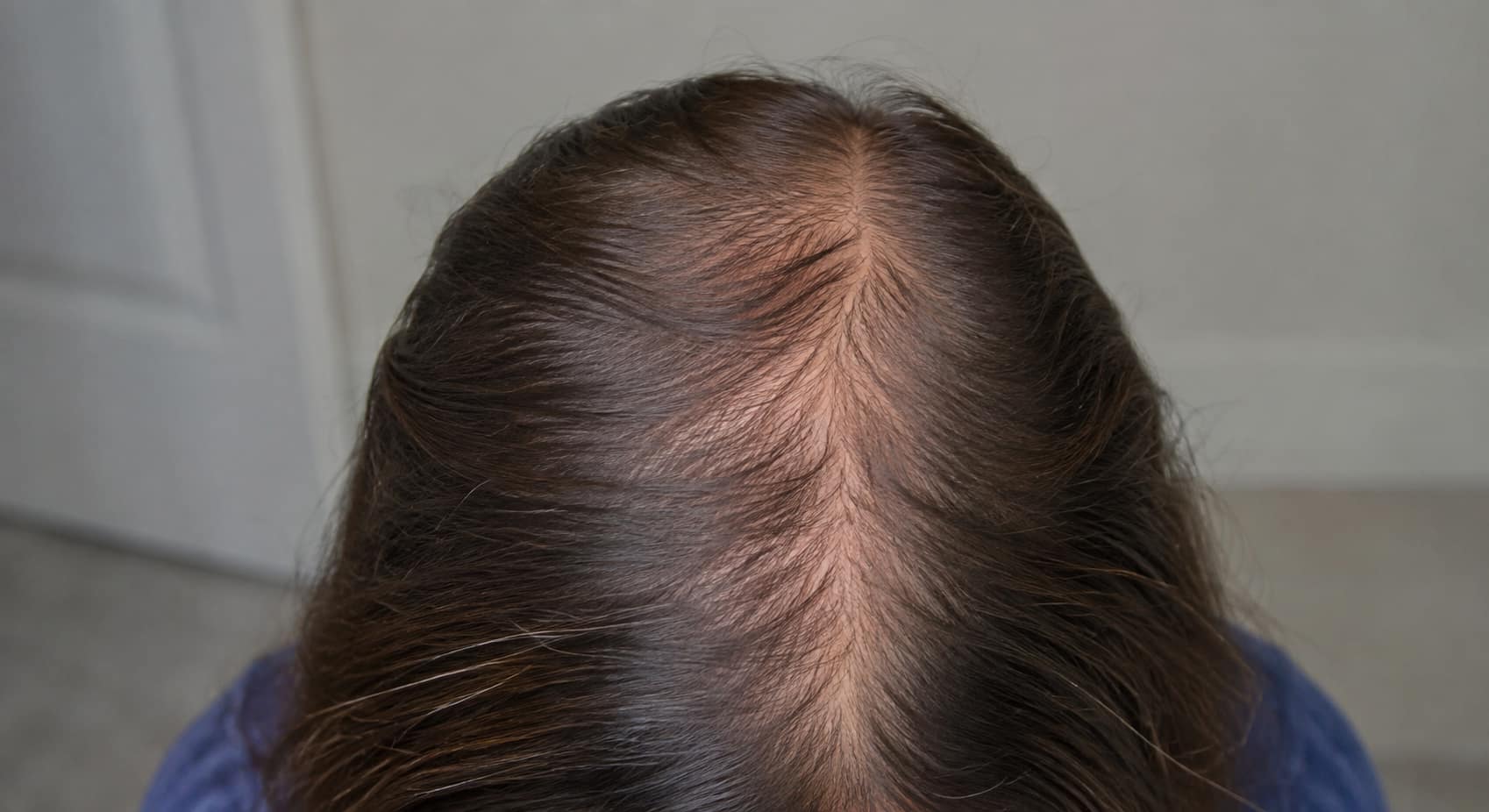
Hair has three growth phases: anagen (active growth, 2–7 years), catagen (transitional phase), and telogen (resting state before shedding). Normally, 50–150 hairs fall out per day. These hairs in catagen and telogen are not a sign of disease, but a natural renewal cycle. That is why hair can remain on a comb or in the bathtub even when the hair is healthy. Seasonal shedding (more often in spring and autumn) is also considered a variant of normal—but only if it is mild and passes without an increase in part width or the appearance of bald spots.
At-home test: pinch a strand of 40–60 hairs between your fingers and slowly slide from root to tip. If more than 6–8 hairs fall out, it’s a reason to pay attention. The test is performed no earlier than 24 hours after washing your hair.
How to understand that hair is falling out more than normal
Warning signs and when a doctor is needed
Signs of pathological shedding: a wider part, hair on the pillow in the morning, bald patches, overall thinning. If hair is falling out ужасfully—what to do first: don’t wait for months, don’t change shampoos weekly, and don’t prescribe vitamins without tests. The first step is a trichologist or dermatologist.
When an urgent consultation is needed: hair falls out in clumps in a short time, patches of baldness have appeared, there is itching or pain, symptoms appeared after starting new medications or after a serious illness.
Why hair falls out: main causes
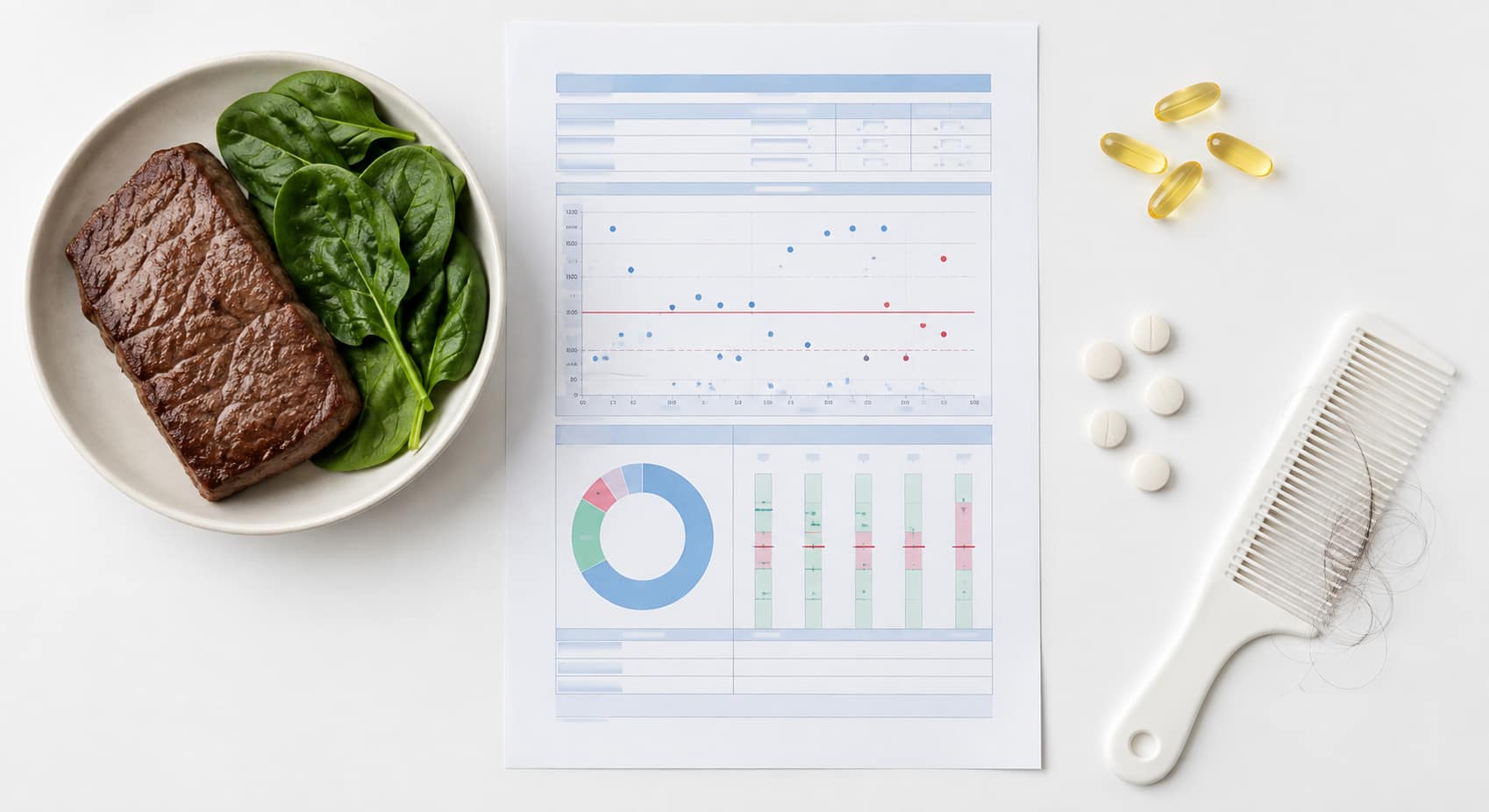
What causes hair to fall out and what it means when hair is shedding
| Cause | Mechanism | Type of shedding |
|---|---|---|
| Iron / ferritin deficiency | Impaired follicle nutrition | Diffuse, telogen |
| Vitamin D, zinc, B-vitamin deficiency | Impaired follicle metabolism | Diffuse |
| Stress (acute or chronic) | Follicles shift into telogen | Telogen, after 2–4 months |
| Hormonal changes (pregnancy, menopause, PCOS) | Androgen effects or hormonal imbalance | Androgenetic, diffuse |
| Thyroid disease | Metabolic disruption | Diffuse |
| Genetic predisposition (DHT) | Follicle miniaturization | Androgenetic alopecia |
| Fungal or bacterial scalp infections | Follicle inflammation | Patchy, scarring |
| Aggressive care, tight hairstyles | Mechanical damage | Traction alopecia |
| Medications (chemotherapy, some antidepressants, retinoids) | Direct toxic effect on the follicle | Diffuse or patchy |
Differences in women and men
Hair loss in women and men: differences and causes
Hair loss in women is most often caused by iron or ferritin deficiency, hormonal imbalance (PCOS, menopause, contraceptives), stress, and androgenetic alopecia—which in women manifests as thinning at the crown rather than receding hairlines. If hormonal shedding is suspected—see a gynecologist or endocrinologist.
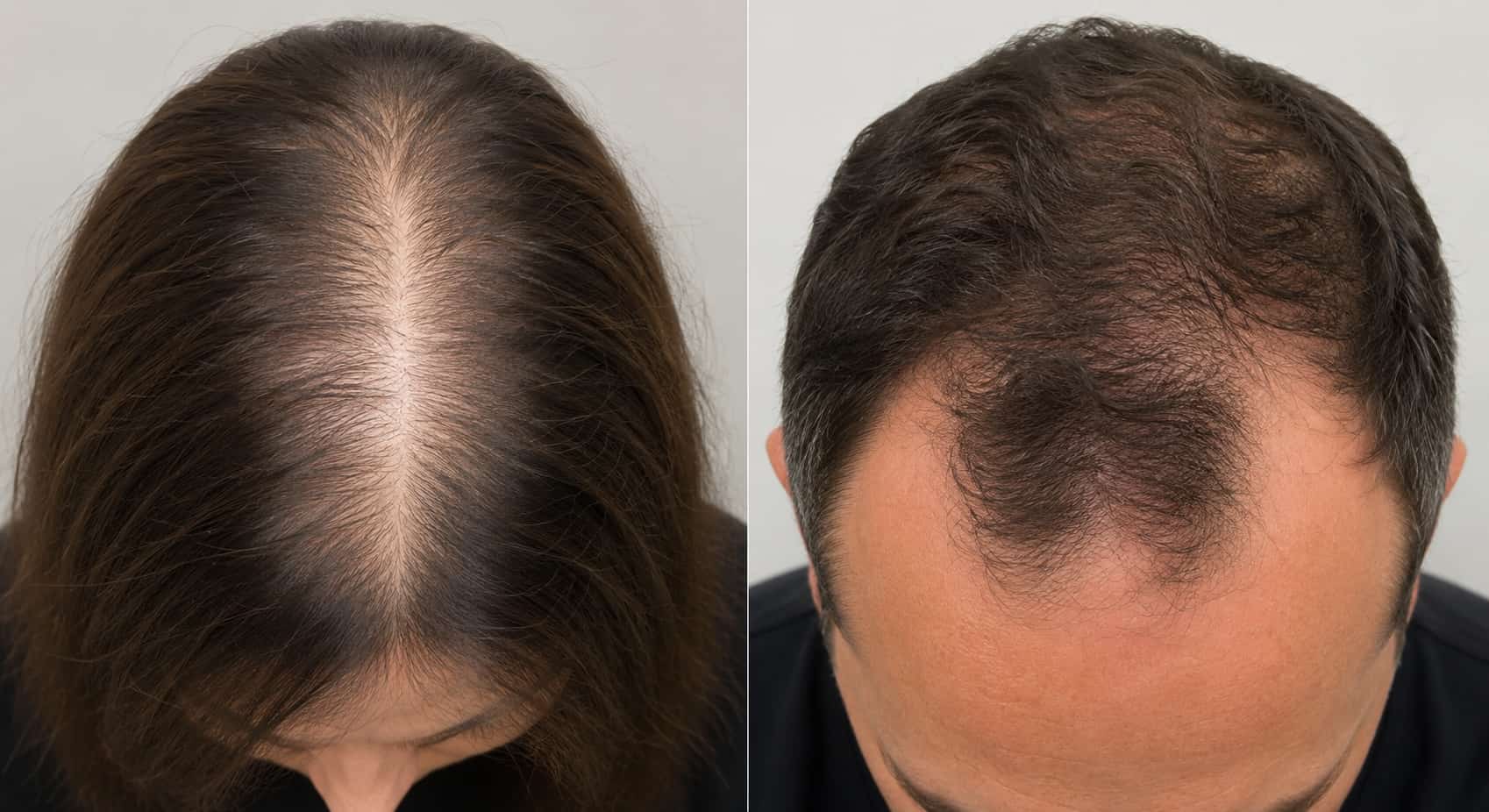
Hair loss in men in 95% of cases is associated with androgenetic alopecia: dihydrotestosterone (DHT) gradually miniaturizes follicles on the forehead and crown. Balding at a young age is often именно this type—and begins at 20–30 years. Early consultation with a trichologist helps slow the process.
After childbirth, stress, and illness
Telogen shedding and recovery
Hair loss after childbirth is one of the most common varieties of telogen shedding. During pregnancy, elevated estrogen keeps follicles in anagen; after childbirth, hormones drop sharply and hair massively shifts into telogen. Peak shedding occurs 3–4 months after the baby is born; it usually resolves on its own by 6–12 months. If it does not resolve, it’s worth getting tests done.
Why hair falls out after stress with a delay: acute stress or illness (including COVID) shifts follicles into telogen, but hair falls out only 2–4 months after the trigger. Therefore, a person does not always connect these events. After illness or COVID, it is important to check iron and ferritin levels—they are often low.
Due to deficiencies and hormones
Iron, ferritin, vitamin D, TSH and tests
Iron deficiency and low ferritin are the most common nutritional cause of diffuse shedding in women. Ferritin is an indicator of iron stores in the body; even with normal hemoglobin, ferritin can be critically low. The recommended ferritin level for hair health is at least 40–70 µg/L (according to trichologists). Vitamin D, zinc, and B-vitamin deficiencies can also cause diffuse thinning. Why you shouldn’t take supplements without tests: an excess of some micronutrients (in particular selenium and vitamin A) can itself cause shedding.
Hormones and the thyroid: elevated or lowered TSH is a common cause of diffuse shedding that is often missed. With hypothyroidism, hair becomes dry and brittle; with hyperthyroidism, it becomes thin and sheds excessively. When you need an endocrinologist: with any abnormality in TSH, T3, T4, as well as suspected PCOS or menopause.
Due to improper care and scalp diseases
Dyeing, tight hairstyles, seborrhea, and fungus
Aggressive dyeing damages the hair shaft structure but not the follicle. If hair falls out with the root after dyeing, the cause is a deficiency or hormonal shift, not the dyeing. Tight hairstyles (braids, ponytails) cause traction alopecia around the perimeter of the head.
Seborrhea, seborrheic dermatitis, and fungal scalp infections are a separate cause. Itching and dandruff combined with hair loss may indicate Malassezia or bacterial inflammation of the follicles. Here you need a dermatologist’s consultation, not just a shampoo change.
Which doctor to see and diagnostics
Trichologist, dermatologist, endocrinologist, and which tests to take
Which doctor to go to: a trichologist or dermatologist as the first step. With signs of thyroid disorders or PCOS—an endocrinologist; with hormonal imbalance in women—a gynecologist; initial evaluation—a therapist or family doctor.
Tests for hair loss: complete blood count, ferritin, vitamin D, TSH/T3/T4, zinc, vitamins B9 and B12; if indicated—sex hormones. Trichoscopy and a phototrichogram are used to assess follicles and determine the type of alopecia.
Treatment of hair loss
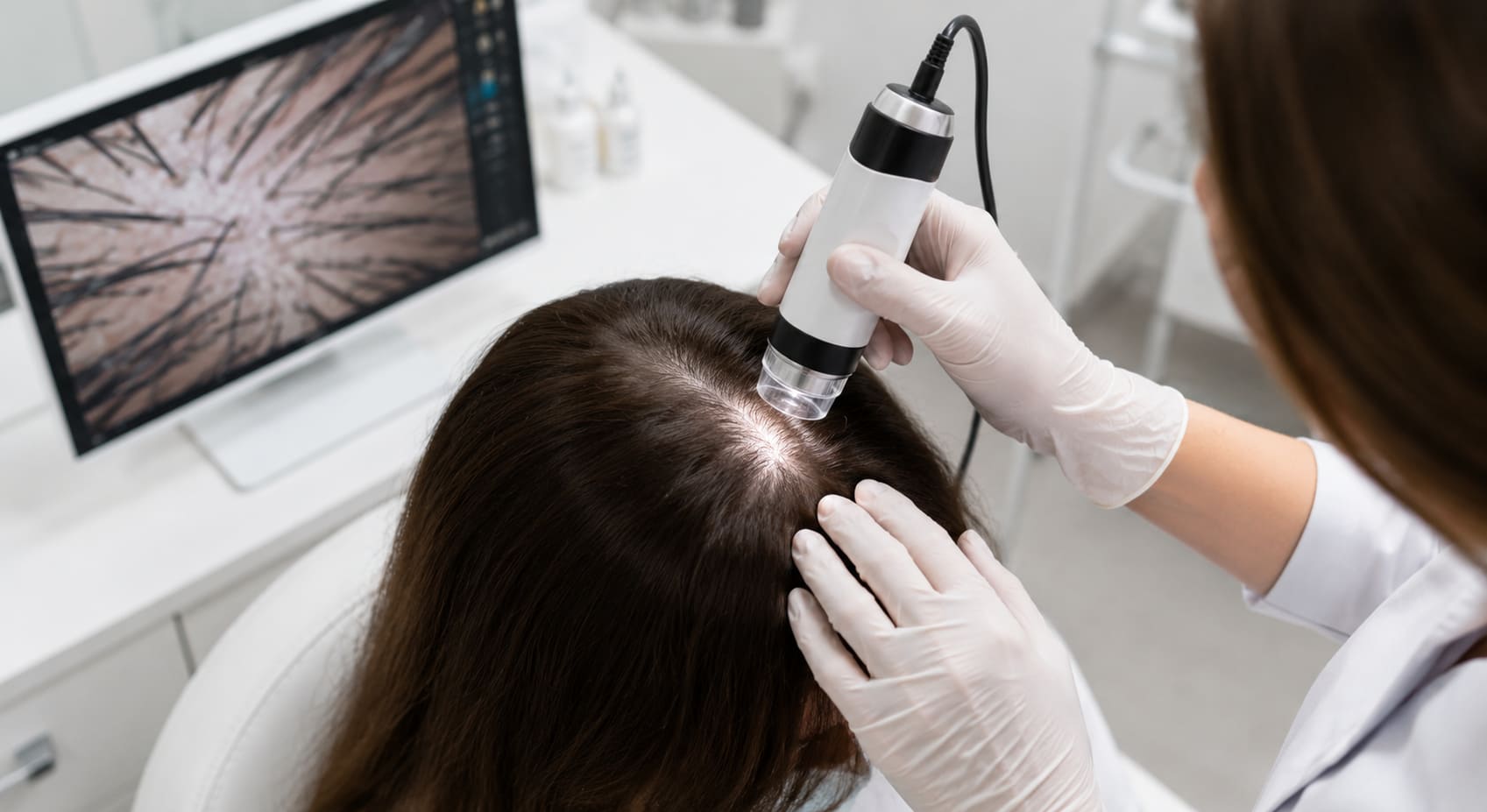
Topical therapy, medications, injections, and when transplantation is needed
How to stop hair loss—the answer depends on the diagnosis. There is no universal remedy. Treatment always begins with eliminating the cause: correcting deficiencies, treating scalp diseases, normalizing hormonal balance.
Topical products: minoxidil (lotion or foam for the scalp) is the most studied topical agent for androgenetic alopecia; prescribed by a doctor. At the beginning of use, a temporary increase in shedding is possible, which passes after 4–6 weeks. The effect is assessed no earlier than after 4–6 months.
Finasteride is a systemic medication for men with androgenetic alopecia; self-medication is dangerous. PRP therapy, mesotherapy, and laser therapy are adjunct methods in комплекс treatment. Hair transplantation is appropriate for stable androgenetic alopecia—but after diagnosis.
Vitamins, nutrition, and home care
When vitamins help, what to eat, and how to care properly
Vitamins for hair loss are effective only with a confirmed deficiency. Iron, vitamin D, zinc, and biotin are the most studied nutrients for hair health. But an excess of some (vitamin A, selenium) can intensify shedding. Without tests—do not prescribe.
Nutrition: enough protein (eggs, chicken, fish, legumes), iron-rich foods (beef, spinach), omega-3s (salmon, flaxseed oil). Strict diets are one of the common causes of telogen shedding.
Home care: a gentle shampoo, delicate combing with a wide-tooth comb from ends to roots, avoiding tight hairstyles, protection from overheating. Anti-hair-loss shampoos can improve scalp condition but do not affect systemic causes. Masks and serums strengthen the length but do not replace treatment.
Checklist: what to do if hair is falling out

- Assess the amount: do the at-home strand test, track the dynamics.
- Check the scalp: is there itching, flaking, patches of baldness.
- Recall triggers: stress, illnesses, diets, new medications in the last 2–4 months.
- Book an appointment with a trichologist or dermatologist—don’t wait several months.
- Get tests as recommended by a doctor: ferritin, vitamin D, TSH, complete blood count.
- Do not start aggressive treatment or take supplements without a diagnosis.
- Keep photo documentation of hair condition once every 4–6 weeks.
FAQ: hair is falling out—what to do
How much hair should fall out normally
50–150 hairs per day. More is a reason to pay attention, especially if the part widens or bald spots appear.
What to do if hair is falling out in clumps
Don’t wait. Clump shedding is a sign of an acute telogen or patchy process; you need a trichologist consultation as soon as possible.
Which tests to take for hair loss
Complete blood count, ferritin, vitamin D, TSH, T3, T4, zinc. If indicated—sex hormones.
Which doctor to see
A trichologist or dermatologist as the first step. Next—based on results: an endocrinologist, a gynecologist.
Do vitamins help with hair loss
Yes—but only with a confirmed deficiency. Without tests, taking supplements may have no effect or cause harm.
Does shampoo for hair loss help
It improves scalp condition and reduces irritation, but does not affect hormonal or nutritional causes.
Why hair falls out after childbirth
A sharp drop in estrogen after childbirth shifts follicles into telogen. It usually resolves by 12 months. If not—diagnostics are needed.
Is it possible to fully restore hair density
With telogen shedding and after устранение the cause—yes, within 6–12 months. With androgenetic alopecia—partial restoration or stabilization.
Conclusion: what to do if hair is falling out
If hair is falling out heavily—the first step is not to buy a new shampoo, but to understand the cause. Most forms of shedding can be corrected if the correct diagnosis is established and treatment is started on time. Early-age balding, diffuse thinning, patchy alopecia—all these conditions have different causes and different treatments. Self-treatment without диагностика can delay recovery or worsen the situation. Seeing a trichologist at the first signs is the most effective strategy.
Sources
- Hughes E.C. et al. Telogen Effluvium. StatPearls, NCBI Bookshelf, 2023.
- Almohanna H.M. et al. The Role of Vitamins and Minerals in Hair Loss: A Review. Dermatology and Therapy, 2019.
- Piraccini B.M. et al. Drug-induced hair loss and hair growth. Drug Safety, 2006.
- American Academy of Dermatology. Hair loss: Who gets and causes. AAD, 2023.
If you are concerned about the condition of your hair, at Lavka Molfara you can choose proven products for scalp care. But first of all—see a doctor to determine the cause.









Write a comment