
 Delivery and payment









-100x100.png)
-100x100.png)





















































- What is magnesium glycinate – Chelated form and how it differs from others
- The role of magnesium in the body – Nervous system, muscles, energy, heart, and bones
- Glycine as magnesium’s partner – What glycine is and how it affects supplement tolerance
- What magnesium glycinate is taken for – Nervous system, sleep, muscles, and magnesium deficiency
- Specifics for different groups – Women, men, athletes, and pregnant women
- Dosage and how to take it – Elemental magnesium, timing, and course duration
- Comparison of magnesium forms – Glycinate vs citrate, malate, oxide, taurate, and L-threonate
- Side effects and contraindications – Possible reactions, who should avoid it, and drug interactions
- How to choose magnesium glycinate – Elemental magnesium, composition, certification, and form
- Common mistakes and FAQ – Mistakes in use and answers to the main questions – What is magnesium glycinate – What magnesium glycinate is for – When it’s best to take it – Can it be taken daily – Does it help with sleep – Can pregnant women take it – What are the side effects – Which medications it should not be combined with
- Conclusion: who magnesium glycinate may be suitable for
- Sources

Magnesium glycinate is a chelated form of magnesium in which the mineral is bound to the amino acid glycine. This combination makes this form especially gentle on the stomach and well absorbed. Today, you can buy magnesium glycinate in most pharmacies and health food stores—demand for it is growing because people are looking for an alternative to inexpensive magnesium oxide, which often does not deliver results. Magnesium glycinate 400 mg is the most popular dosage for adults. In this article, we’ll look at what it’s taken for, how it works, and who it’s suitable for.

What is magnesium glycinate
Chelated form and how it differs from others
Magnesium glycinate (magnesium glycinate) is a magnesium chelate: the mineral molecule is “wrapped” in the amino acid glycine, which protects it from breakdown in the stomach and promotes absorption through the intestinal wall. Chelated magnesium is absorbed 80% better than oxide and does not produce a laxative effect at standard doses—unlike citrate when exceeded.
How the chelated form differs from others: oxide is poorly absorbed (4–5%), citrate is absorbed well (25–30%) but may loosen stools at higher doses; glycinate is the gentlest for the GI tract and optimal for daily use. Who should choose this form: people with a sensitive stomach, those who need magnesium for the nervous system and sleep (glycine enhances the calming effect), and those who took oxide or an inexpensive complex and didn’t feel an effect.
The role of magnesium in the body
Nervous system, muscles, energy, heart, and bones
Magnesium is involved in more than 300 enzymatic reactions. Magnesium for the nervous system means regulation of NMDA receptors and synthesis of GABA, the main inhibitory neurotransmitter. With deficiency—anxiety, irritability, heavy sleep. During chronic stress, the adrenal glands produce cortisol, which depletes magnesium stores in cells—creating a vicious circle.
Magnesium for muscles: it competes with calcium for entry into the muscle cell—calcium contracts, magnesium relaxes. Deficiency → the muscle “gets stuck” in contraction → cramps. Magnesium for nighttime leg cramps is one of the most common requests. Magnesium for the heart: it regulates heart rhythm and lowers blood pressure. For bone support: 60% of the body’s magnesium is found in bones; it’s necessary to activate vitamin D, without which calcium will not be absorbed.
Glycine as magnesium’s partner
What glycine is and how it affects supplement tolerance
Glycine is the simplest amino acid, which the body produces on its own, but it may be insufficient under stressful conditions. It is an inhibitory neurotransmitter in the spinal cord and some parts of the brain, reducing excitability of the nervous system. A 2012 Japanese study (Kawai et al., Sleep and Biological Rhythms) showed that 3 g of glycine before sleep reduced the time to fall asleep and improved subjective sleep quality in people with insomnia.
How glycine affects tolerability: it protects the stomach lining and has a slightly sweet taste, making the powdered form of glycinate more pleasant than others. The calming effect of glycine separately from magnesium is small but real. That’s why magnesium glycinate at night is especially popular for sleep problems.

What magnesium glycinate is taken for
Nervous system, sleep, muscles, and magnesium deficiency
What magnesium glycinate is most often taken for: supporting the nervous system during stress and overwork, improving sleep quality (falling asleep and depth), reducing muscle spasms and cramps, supporting heart rhythm, replenishing magnesium deficiency when a test confirms a low level.
Signs of possible magnesium deficiency: chronic fatigue despite adequate sleep, muscle twitches and cramps, irritability for no apparent reason, a feeling of palpitations or “skipped beats,” difficulty falling asleep, headaches. Important: these symptoms are nonspecific, so it’s better to confirm magnesium deficiency with a test (serum magnesium or magnesium in erythrocytes).
Risk groups for deficiency: people with chronic stress, athletes (loss through sweat), vegans and vegetarians without careful diet planning, people with type 2 diabetes, those taking diuretics or proton pump inhibitors.
Specifics for different groups
Women, men, athletes, and pregnant women
Magnesium for women is especially relevant for PMS: it reduces pain, fluid retention, and mood swings 1–2 weeks before menstruation. Magnesium during pregnancy: the need increases by 25%, but supplements only as prescribed by a doctor—there is a risk of excessive uterine relaxation at high doses. Magnesium during breastfeeding also requires consultation.
Magnesium for men: supports recovery after strength training, sleep quality (which affects testosterone levels), and reduces the risk of cardiovascular disease. Magnesium for athletes: magnesium loss through sweat during intensive exercise is significant—up to 10–15% of the daily requirement per workout. Glycinate is especially convenient because it doesn’t cause diarrhea at higher doses.
Dosage and how to take it
Elemental magnesium, timing, and course duration
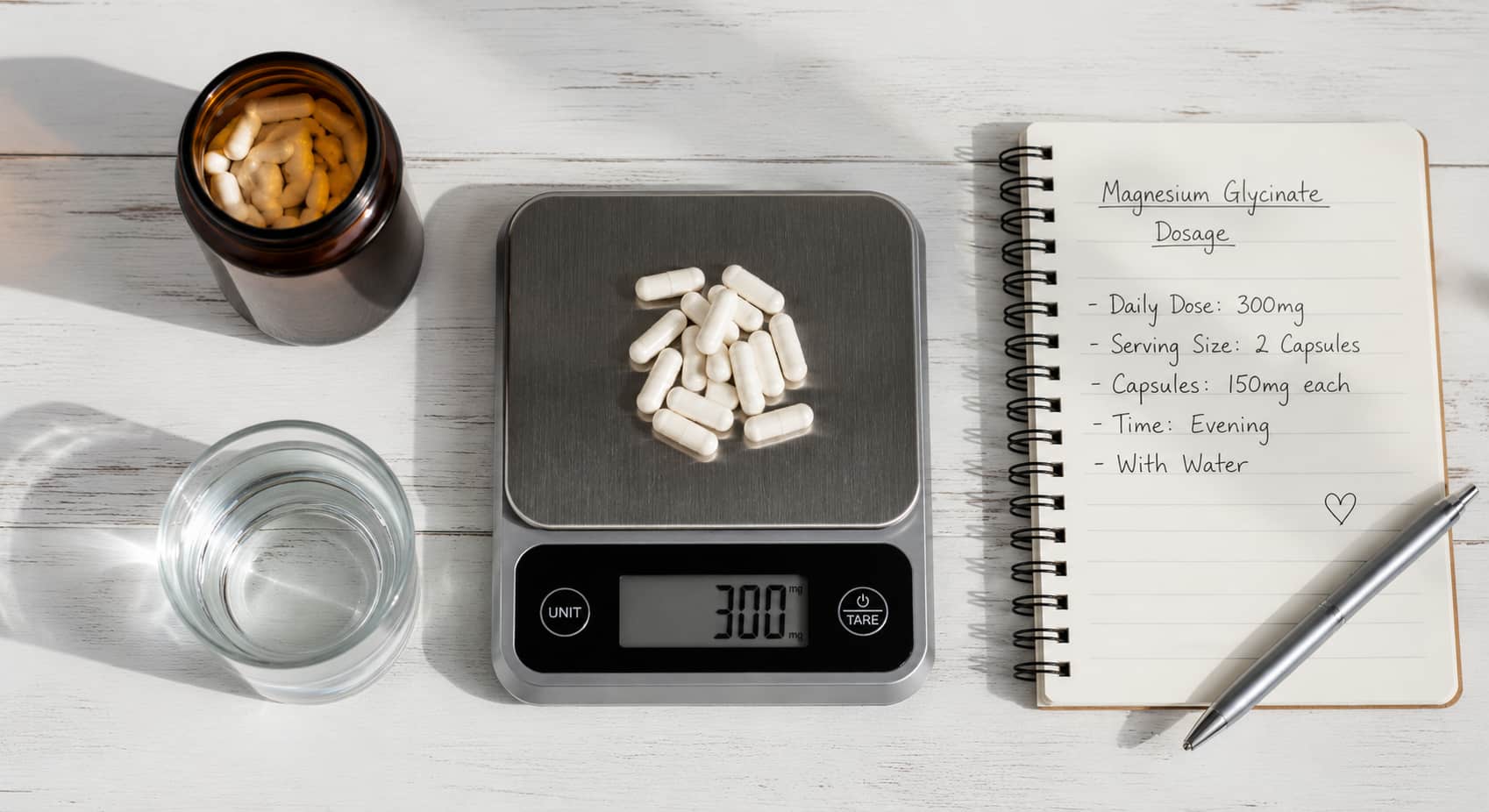
Magnesium glycinate dosage: look at the amount of elemental magnesium, not the mass of the compound. A 1000 mg magnesium glycinate capsule contains approximately 140–200 mg of elemental magnesium, depending on the manufacturer. Daily requirement of elemental magnesium: women 310–320 mg, men 400–420 mg.
| Goal | Recommended dose of elemental Mg/day |
|---|---|
| General support, prevention | 150–300 mg |
| Deficiency, stress, PMS | 300–400 mg |
| Athletes, intensive workloads | 400–500 mg |
| Therapeutic purposes (under medical supervision) | up to 600 mg |
How to take magnesium glycinate: with food or without—both options are acceptable, but with a small amount of food is more comfortable for a sensitive stomach. When to take it: to support sleep and relieve evening tension—30–60 minutes before bedtime. For energy support—in the morning. General support—you can split the dose into 2 servings. Course duration: at least 4–6 weeks for a noticeable effect; with chronic deficiency—3–6 months.
Comparison of magnesium forms
Glycinate vs citrate, malate, oxide, taurate, and L-threonate
| Form | Absorption | Best for |
|---|---|---|
| Glycinate | High, gentle on the GI tract | Nerves, sleep, daily use, sensitive GI tract |
| Citrate | High, may loosen stools | Constipation, quick replenishment, cheaper option |
| Malate | High | Chronic fatigue, sports, daytime use |
| Oxide | Low (4–5%) | Laxative effect, cheapest |
| Taurate | High | Heart, arrhythmia, blood pressure |
| L-threonate | High, penetrates the brain | Cognitive function, memory, expensive |
Magnesium glycinate or citrate is the most common question. With a sensitive stomach or a tendency to diarrhea—glycinate. With a tendency to constipation and a desire to save money—citrate. Magnesium glycinate is the best magnesium for those who need calm, gentle daily use without GI surprises.

Side effects and contraindications
Possible reactions, who should avoid it, and drug interactions
Magnesium glycinate side effects at standard doses are minimal. Possible: mild nausea or stomach discomfort when taken on an empty stomach, excessive drowsiness when taken during the day in high doses, rarely—an allergic reaction. In case of overdose: diarrhea, nausea, weakness.
Contraindications: kidney failure (the kidneys do not excrete excess magnesium), hypermagnesemia, myasthenia gravis, heart block.
Drug interactions: reduces absorption of antibiotics (tetracyclines, fluoroquinolones)—an interval of at least 2 hours; may interact with thyroid medications, bisphosphonates; enhances the effect of muscle relaxants; with diuretics—monitor magnesium levels. Pregnancy and breastfeeding without a doctor’s consultation is not recommended.
How to choose magnesium glycinate
Elemental magnesium, composition, certification, and form
The first step is to check the amount of elemental magnesium per serving (not the mass of the glycinate salt). Purity of the formula: minimal excipients, no dyes or synthetic flavorings. Quality certification: GMP or NSF is a sign of controlled manufacturing. Form: capsules—convenience and precise dosing; tablets—similarly; powder—flexible dosing, but a specific taste.
If the formula includes vitamin B6: magnesium glycinate and B6 are a synergistic pair for the nervous system and PMS; B6 improves magnesium uptake by cells. But if you are already taking other complexes with B6—watch the total dose so as not to exceed the upper limit (100 mg/day).
Popular combinations: magnesium glycinate with zinc is suitable for immunity and men’s health; with D3—for bone and immune support in the winter season.
Common mistakes and FAQ
Mistakes in use and answers to the main questions
Typical mistakes: focusing on compound weight rather than elemental magnesium; taking it together with calcium or antibiotics without an interval; expecting an effect in 2–3 days (realistically 2–4 weeks); choosing the cheapest product with magnesium oxide and being surprised by the lack of results; taking large doses on an empty stomach and getting nausea.

What is magnesium glycinate
A chelated form of magnesium bound to the amino acid glycine. It is distinguished by a gentle effect on the GI tract and good absorption.
What magnesium glycinate is for
Support for the nervous system, improved sleep, reduced muscle spasms, replenishing magnesium deficiency.
When it’s best to take it
For sleep and relaxation—in the evening 30–60 minutes before bedtime. For energy—in the morning. You can split it into 2 doses.
Can it be taken daily
Yes, daily use in recommended doses is safe. With kidney failure—only with a doctor.
Does it help with sleep
Yes, due to the combined effect of magnesium (GABA activation, muscle relaxation) and glycine (inhibition of excitability). The effect is noticeable after 2–3 weeks of regular use.
Can pregnant women take it
Only as prescribed by a doctor. Magnesium needs increase during pregnancy, but self-prescribing is undesirable.
What are the side effects
Rare and mild—slight stomach discomfort when taken on an empty stomach, drowsiness at high doses.
Which medications it should not be combined with
Without an interval—with antibiotics, thyroid medications, bisphosphonates. Leave at least 2 hours.
Conclusion: who magnesium glycinate may be suitable for
Magnesium glycinate is an optimal choice for those who want to support the nervous system, improve sleep, and reduce muscle tension without GI side effects. It’s worth buying magnesium glycinate from a trusted manufacturer with a clear indication of the elemental magnesium dose. Magnesium chelate is suitable for people under stress, with PMS, athletes, and those for whom citrate caused digestive issues. Magnesium glycinate is a gentle, effective, and well-studied form for daily use.
Sources
- Kawai N. et al. The sleep-promoting and hypothermic effects of glycine are mediated by NMDA receptors. Sleep and Biological Rhythms, 2012.
- Boyle NB et al. The Effects of Magnesium Supplementation on Subjective Anxiety and Stress. Nutrients, 2017.
- NIH Office of Dietary Supplements. Magnesium – Fact Sheet for Health Professionals. 2023.
- Abbasi B et al. The effect of magnesium supplementation on primary insomnia. Journal of Research in Medical Sciences, 2012.
If you need help choosing magnesium glycinate—Lavka Molfara has proven options from reliable manufacturers.










-400x300.png)

Write a comment